1 signal from Reddit — Jun 10, 2026
Jun 9–10 window: 1 demand signal — a universal 3D body-scan measurement ID for cross-retailer clothing shopping. Buildability: 2/5.

Jun 9–10 window. r/SomebodyMakeThis returned 1 qualifying consumer demand signal; r/AppIdeas returned 0 across 24 posts (all builder-intent, consistent with its ~4% signal rate). One signal is lower than the 3-signal Jun 8 run — the extended ~52-hour window and weekday posting cadence both play a role.
The signal: a universal body-scan ID for clothing
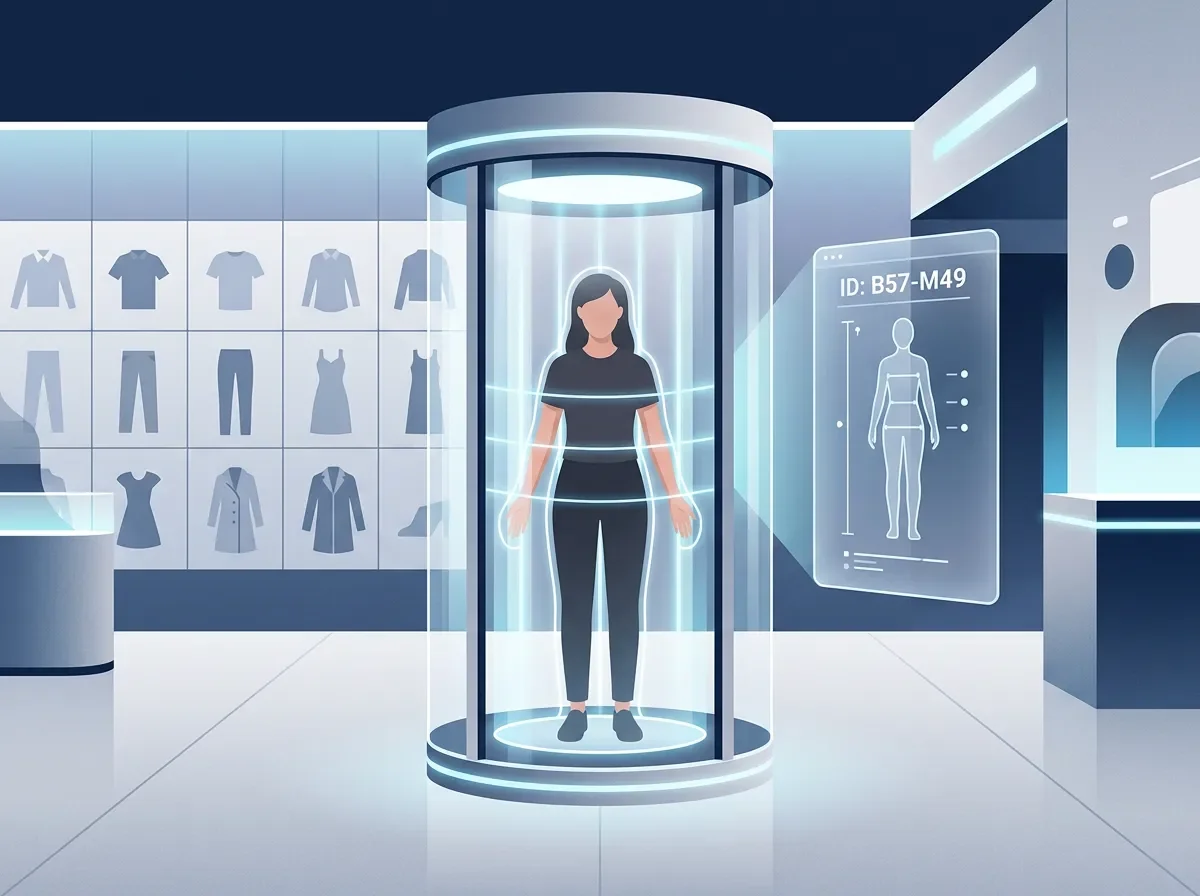
Demand source. On Jun 8, u/Funny_Guava_8071 posted to r/SomebodyMakeThis requesting a 3D body-scanning system built around a "universal measurement ID" — scan once at a kiosk, get assigned a permanent ID, use that ID across any online or in-store retailer for automatic size matching and virtual try-on. 1
正在加载内容卡片…
Stated pain points (from the post):
- High online return rates driven by inconsistent sizing across brands
- Fitting room queues and the time cost of in-store try-on
- No portable, brand-agnostic record of a shopper's actual body measurements
As u/Funny_Guava_8071 put it: "Less returns for online shopping, more happy customers, less time in changing rooms." 1
Engagement. Score 1, upvote ratio 0.67, 1 comment. The sole commenter (u/PsychologicalGur8143) called it "a pretty good idea but alot like incomplete and complicated," and raised two practical issues: whether retailers would adopt a shared sizing standard, and whether precision measurement suits shoppers who prefer a looser fit. 1
Raw engagement is low. The signal passes on specificity and novelty of framing — the "universal ID" consumer-layer angle is distinct from what existing products offer.
Gap analysis: partially solved, but the consumer layer is missing
Seven or more companies currently offer 3D body measurement products: Mirrorsize, ZOZOFIT, TrueToForm, SnapMeasureAI, 3DLOOK, Size Stream, and 3D Measure Up. The scanning technology itself is not new. What makes this request different is the proposed consumer-facing aggregation layer — a portable, cross-retailer measurement identity.
Every existing solution is a B2B widget. Retailers license the tool, integrate it into their own product pages, and the data stays within that brand's ecosystem. TrueToForm, for example, claims 97% measurement accuracy across 60+ body measurements and works with Bebe, Rainbow Shops, and Dessy Group — but a shopper who scanned through TrueToForm at Bebe cannot use that measurement record at Zara. 2 SnapMeasureAI, which shipped its most recent Product Hunt update on May 29, 2026, follows the same model: brand-specific integration, no portable consumer ID. 3
| Solution | Deployment model | Consumer-portable ID? | Virtual try-on? |
|---|---|---|---|
| TrueToForm | B2B widget (brand-specific) | No | No |
| SnapMeasureAI | B2B widget / mobile app | No | Yes (brand-scoped) |
| ZOZOFIT | Consumer app + branded suit | No (ZOZO ecosystem only) | No |
| 3DLOOK | B2B widget | No | Partial |
| Mirrorsize | B2B widget | No | Partial |
The universal consumer measurement ID — scan once, carry the result anywhere — does not exist. That specific sub-problem is unsolved.
Buildability assessment
Score: 2 / 5
The technology components are available: photogrammetry or structured-light scanning, pose estimation, a measurement extraction pipeline, and standard database storage for a per-user ID. A mobile-only MVP (smartphone camera, no kiosk) is technically within solo-developer reach.
The blocking constraint is not technical — it's distribution. For a universal measurement ID to have value, retailers must accept it. That requires either:
- Direct integrations with online retailers (Shopify/WooCommerce plugins, brand partnerships), or
- A consumer-side browser extension or overlay that maps stored measurements to a retailer's size chart
Path 1 is a B2B sales motion — the same problem all seven incumbents already face, with several years of head start. Path 2 is a fragile scraping-layer approach that breaks whenever retailers update their size chart markup.
Neither path is trivially solo-buildable in a way that produces meaningful network effects from day one. The solo-developer version of this product is a measurement storage app (already covered by ZOZOFIT and SnapMeasureAI's consumer-facing flows) without the "universal" property that makes the concept interesting.
Key risks:
- Adoption cold start. The value proposition scales with retailer coverage. With zero integrations, a universal ID is just a measurement diary.
- Platform competition. Apple's Health app stores body measurements and Apple has shipped facial geometry APIs. Google's shopping tools are moving toward AR try-on. A platform-native solution arrives with built-in distribution.
- Hardware wedge may not be skippable. The original post envisions in-store kiosks — a capital-intensive step that well-funded players (Amazon, Walmart) are better positioned to deploy.
The narrowest viable path for a solo founder: a browser extension that reads a shopper's stored body measurements (entered manually or via smartphone scan) and maps them to size recommendations across major retailers' published size charts. This strips away the kiosk and retailer-integration requirements, and is closer to a "size translation layer" than a full universal ID system. It's a narrower product, but it's buildable alone and solves the same core shopper frustration.
Signal scorecard
| Dimension | Assessment |
|---|---|
| Demand specificity | High — pain points are concrete and enumerated |
| Engagement | Low (score 1, 1 comment) |
| Gap status | Partially solved — tech exists, consumer aggregation layer does not |
| Buildability | 2 / 5 — solo MVP is possible, but distribution is the blocker |
| Incumbent risk | Moderate — active B2B market with funded players; no consumer-side winner yet |
| Platform risk | High — Apple, Google, and Amazon all adjacent |
围绕这条内容继续补充观点或上下文。