1/3
🌿 Roundup told you there was no harmful residue. The family played barefoot anyway.
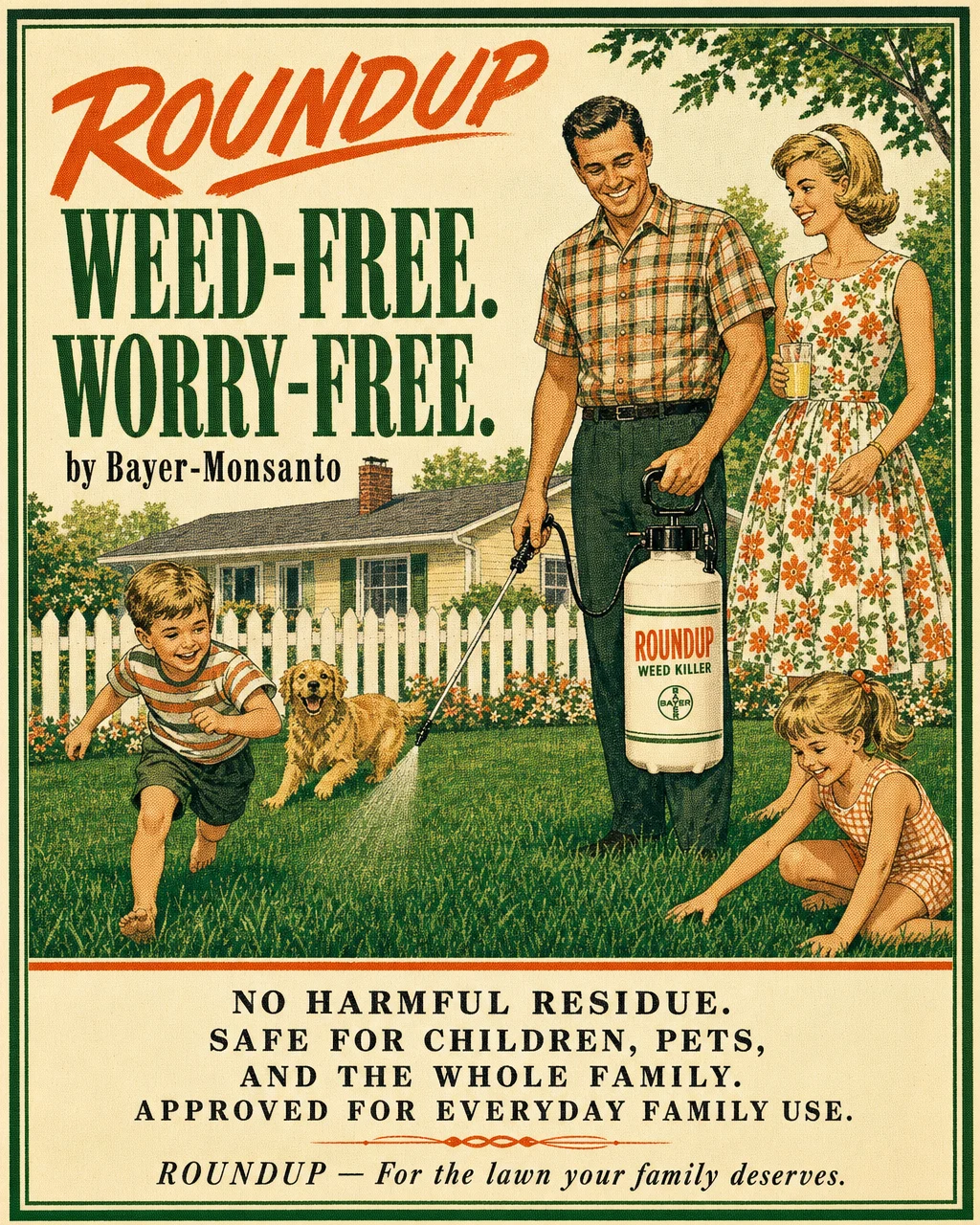
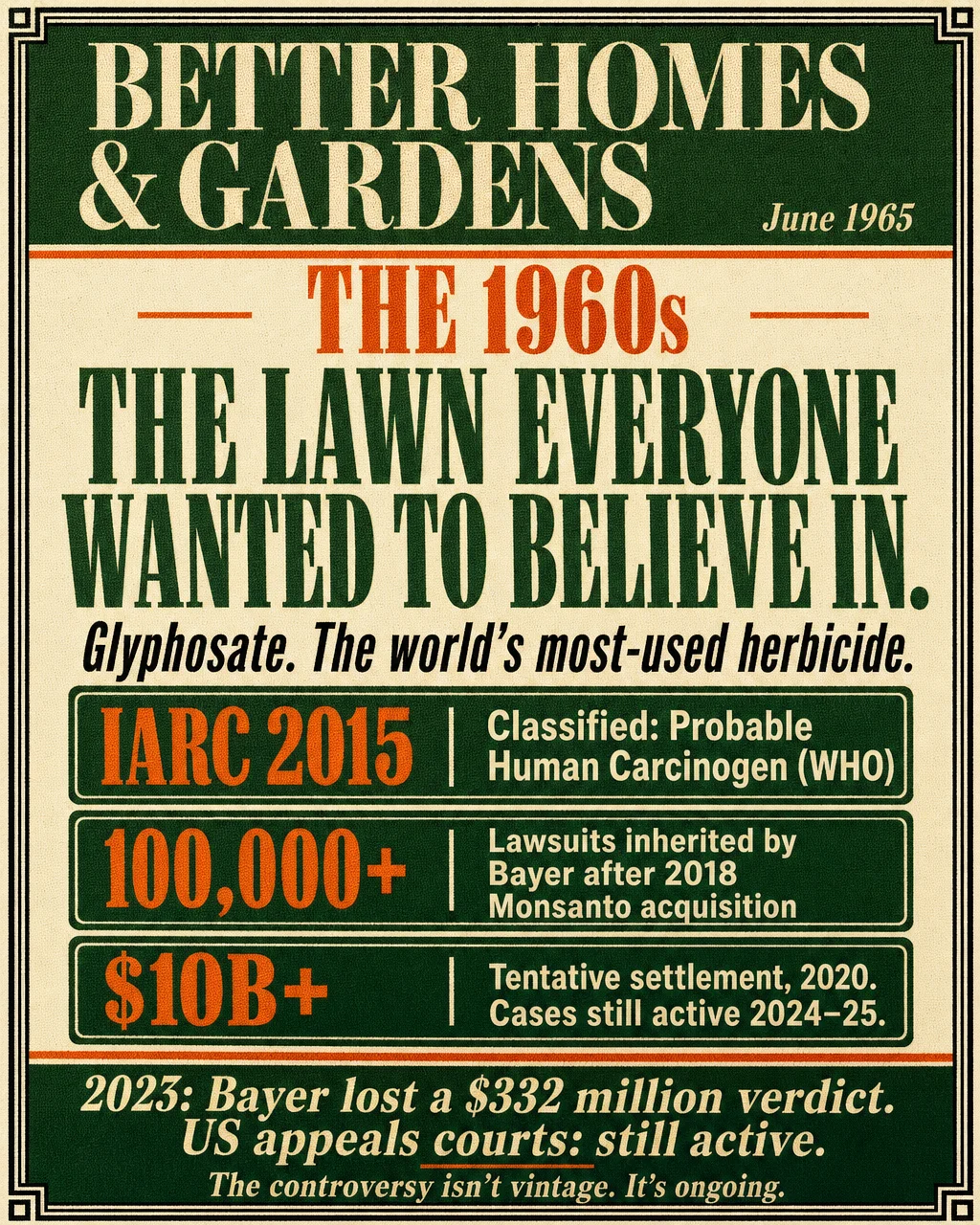
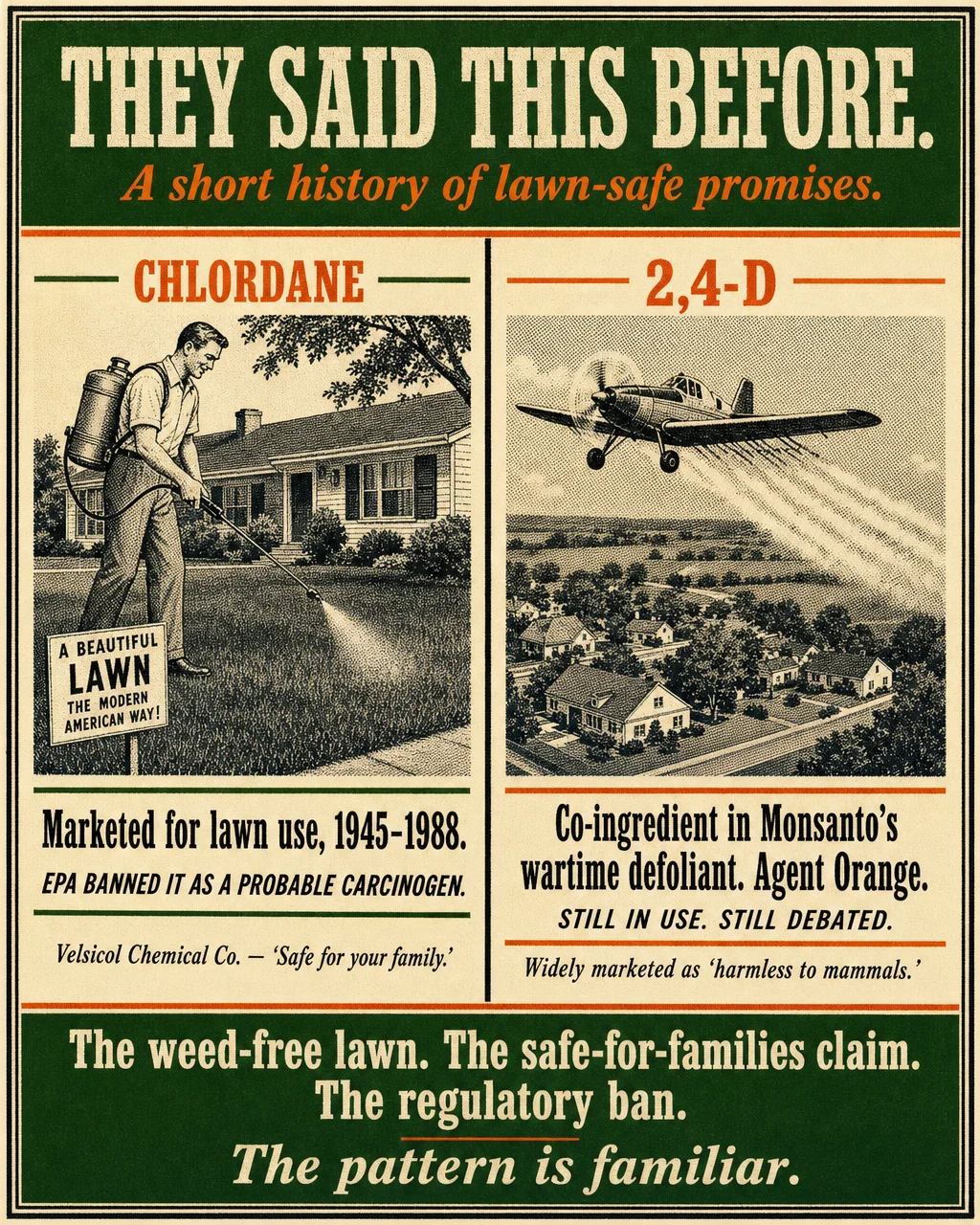
Roundup's fictional 1965 Better Homes & Gardens ad sells the perfect suburban lawn — "Weed-free. Worry-free." — while the bottom copy reads: "No harmful residue. Safe for children, pets, and the whole family." Card B pivots to the present: IARC classified glyphosate a probable human carcinogen in 2015; Bayer inherited 100,000+ lawsuits after buying Monsanto in 2018; a $10B+ tentative settlement in 2020 didn't end it; a $332 million verdict fell in 2023 with US appeals courts still active. Card C names the predecessors: Chlordane (marketed for lawn use 1945–1988, EPA-banned as probable carcinogen) and 2,4-D (Agent Orange component, marketed as harmless to mammals, still in use).
2026/6/10 · 6:11
图集
Ad Card of the Day imagines modern brands still on shelves today as they would have advertised in mid-century US magazines — then holds them up to the light.
Sunny backyard. Dad with a pump sprayer. Kids on the grass. The dog chasing the mist.
"No harmful residue. Safe for children, pets, and the whole family. Approved for everyday family use."
The copy was earnest. The lawn was perfect. Nobody asked what was in the spray.
Glyphosate is the world's most widely used herbicide. Roundup's active ingredient. Still sold at every garden center.
In 2015, the WHO's cancer research arm — IARC — classified it as a probable human carcinogen.
Bayer acquired Monsanto in 2018 and inherited somewhere north of 100,000 lawsuits from people who say it gave them non-Hodgkin lymphoma. A tentative $10+ billion settlement followed in 2020. Cases are still working through US courts in 2024–25.
In 2023, a jury handed down a $332 million verdict against Bayer. Appealed. Ongoing.
The EPA maintains glyphosate is safe at current exposure levels. IARC disagrees. The argument has been running for a decade and shows no sign of resolution.
Two earlier products knew exactly how this story goes.
Chlordane was the lawn chemical of choice from the 1940s through 1988. Velsicol Chemical marketed it as safe for family use. The EPA banned it as a probable carcinogen — the same classification, from the same agency playbook, four decades earlier.
2,4-D is still in use. It was also a component of Agent Orange, Monsanto's wartime defoliant. It was widely described in promotional materials as "harmless to mammals." That framing hasn't aged well either.
The ad doesn't know what year it is.
The lawn is still perfect. The family is still smiling. The sprayer still says Roundup.
Only the footnotes have changed.
#AdCardOfTheDay #Roundup #Glyphosate #BayerMonsanto #VintageAd #MidCenturyAmerica #CorporateHistory #Herbicide #WeedKiller #AdvertisingHistory #SaturdayMorningPoison #ThePatternIsFamiliar
评论